Home › Reading › C1 Reading Tests › The Strange Comfort of Rereading
The Strange Comfort of Rereading – C1 English Reading Test
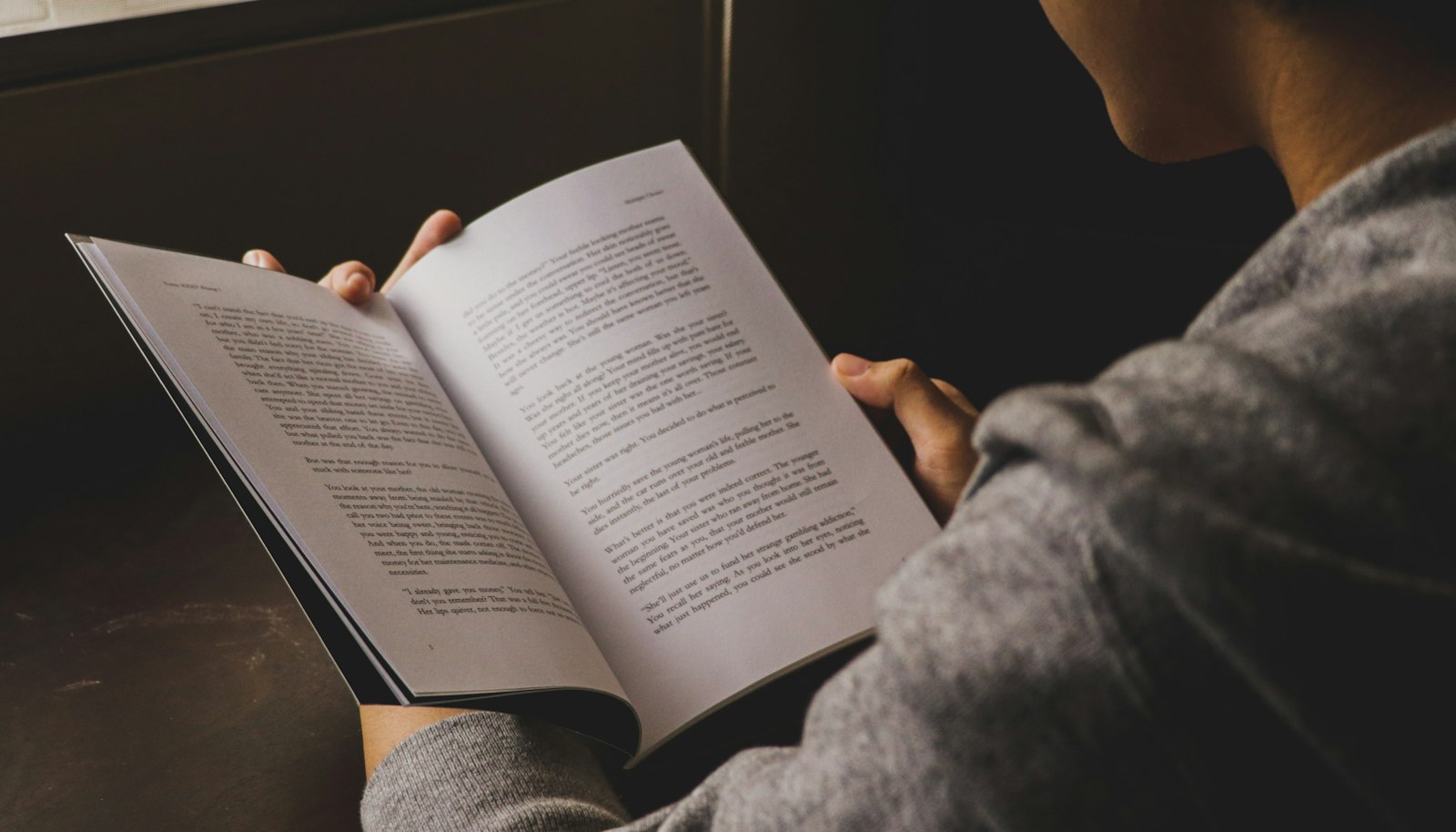
Key words and reading strategy
This is a discursive essay. The writer presents a common view (rereading is a waste of time), then challenges it with evidence and argument, and finally offers a balanced conclusion. At C1 you need to follow this line of argument and recognise the writer’s tone – here, gently persuasive and slightly ironic.
Key terms
The Strange Comfort of Rereading
1There is a particular kind of guilt that afflicts keen readers. It strikes when they find themselves reaching, yet again, for a novel they already know almost by heart, while a pile of unread books – many of them bought with the best of intentions – sits accusingly on the bedside table. Life is short, the reasoning goes, and there are more books in the world than anyone could finish in a dozen lifetimes. Why waste precious hours on a story whose ending you already know?
2It is a fair question, and one that our culture seems to answer decisively. We celebrate novelty. Reading challenges encourage us to finish fifty, a hundred, even two hundred books a year; online lists remind us of the classics we have shamefully failed to read. In this climate, returning to an old favourite can feel faintly like cheating – the literary equivalent of ordering the same dish at the same restaurant every week.
3Yet a growing body of research suggests that this view misunderstands what rereading actually does. In one frequently cited series of studies, participants were asked to repeat an experience – watching a film, visiting a museum, reading a story – and to predict beforehand how much they would enjoy the second time. Consistently, they underestimated their enjoyment. The repeated experience was not a pale copy of the first; it was, in many cases, richer.
4Part of the explanation is simple. On a first reading, much of our attention is consumed by the question of what happens next. Freed from suspense, the rereader can notice what was invisible before: the precise choice of a word, a seemingly minor character who turns out to matter, a clue planted in the opening chapter. The novelist Vladimir Nabokov went so far as to claim that one cannot read a book at all, only reread it – a deliberately provocative remark, but one with a kernel of truth.
5There is also the matter of who is doing the reading. A book does not change between one encounter and the next, but its reader does. The novel you loved at seventeen, with its doomed romance and its furious rejection of adult hypocrisy, may read very differently at forty-five, when you find yourself sympathising – to your considerable surprise – with the parents. In this sense, rereading is less a return to the same place than a way of measuring how far you have travelled.
6And then there is comfort, which deserves to be taken more seriously than it usually is. Psychologists have noted that people tend to turn to familiar stories, songs and films during periods of stress or uncertainty. Knowing how things will turn out offers a kind of controlled emotional experience: we can feel sadness, fear or longing in the safe knowledge that we will emerge on the other side. Far from being an escape from life, this may be one of the ways in which we gather the strength to face it.
7None of this is an argument against new books. Discovery remains one of the great pleasures of reading, and a literary diet consisting entirely of the familiar would soon grow stale. But the next time you find yourself hesitating over a well-worn paperback, it might be worth resisting the pressure to keep moving on. The pile on the bedside table will still be there tomorrow. The book in your hand, meanwhile, may have more to say to you than you remember.
Multiple choice
Choose the best answer.
1What is the ‘guilt’ described in paragraph 1?
Why: Reaching again for a novel they already know while unread books wait.
Paragraph 1 ↗“It strikes when they find themselves reaching, yet again, for a novel they already know almost by heart, while a pile of unread books – many of them bought with the best of intentions – sits accusingly on the bedside…”
2The comparison with ordering the same dish suggests that rereading is seen as…
Why: The literary equivalent of ordering the same dish every week.
Paragraph 2 ↗“In this climate, returning to an old favourite can feel faintly like cheating – the literary equivalent of ordering the same dish at the same restaurant every week.”
3What did the studies in paragraph 3 find?
Why: They underestimated their enjoyment.
Paragraph 3 ↗“Consistently, they underestimated their enjoyment.”
4Why does the writer quote Nabokov?
Why: A remark with a kernel of truth.
Paragraph 4 ↗“The novelist Vladimir Nabokov went so far as to claim that one cannot read a book at all, only reread it – a deliberately provocative remark, but one with a kernel of truth.”
5What point does the example of reading at seventeen and forty-five illustrate?
Why: A book does not change… but its reader does.
Paragraph 5 ↗“A book does not change between one encounter and the next, but its reader does.”
6How does the writer view the comfort of rereading?
Why: One of the ways in which we gather the strength to face it.
Paragraph 6 ↗“Far from being an escape from life, this may be one of the ways in which we gather the strength to face it.”
7What is the writer's overall conclusion?
Why: None of this is an argument against new books. But…
Paragraph 7 ↗“None of this is an argument against new books.”
True or False
Decide if each statement is true or false according to the text.
8The writer suggests our culture values new experiences highly.
Why: We celebrate novelty.
Paragraph 2 ↗“We celebrate novelty.”
9The studies only looked at reading.
Why: Watching a film, visiting a museum, reading a story.
Paragraph 3 ↗“In one frequently cited series of studies, participants were asked to repeat an experience – watching a film, visiting a museum, reading a story – and to predict beforehand how much they would enjoy the second time.”
10On a first reading, we often focus on the plot.
Why: Much of our attention is consumed by what happens next.
Paragraph 4 ↗“On a first reading, much of our attention is consumed by the question of what happens next.”
11The writer takes Nabokov's statement completely literally.
Why: A deliberately provocative remark, but one with a kernel of truth.
Paragraph 4 ↗“The novelist Vladimir Nabokov went so far as to claim that one cannot read a book at all, only reread it – a deliberately provocative remark, but one with a kernel of truth.”
12According to psychologists, people turn to familiar stories in difficult times.
Why: During periods of stress or uncertainty.
Paragraph 6 ↗“Psychologists have noted that people tend to turn to familiar stories, songs and films during periods of stress or uncertainty.”
13The writer recommends reading only familiar books.
Why: A diet consisting entirely of the familiar would soon grow stale.
Paragraph 7 ↗“Discovery remains one of the great pleasures of reading, and a literary diet consisting entirely of the familiar would soon grow stale.”
Paragraph functions
What is the main function of each paragraph?
14Paragraph 1
Why: Why waste hours on a story you know?
Paragraph 1 ↗“Why waste precious hours on a story whose ending you already know?”
15Paragraph 2
Why: Reading challenges, lists of classics.
Paragraph 2 ↗“Reading challenges encourage us to finish fifty, a hundred, even two hundred books a year; online lists remind us of the classics we have shamefully failed to read.”
16Paragraph 3
Why: A frequently cited series of studies.
Paragraph 3 ↗“In one frequently cited series of studies, participants were asked to repeat an experience – watching a film, visiting a museum, reading a story – and to predict beforehand how much they would enjoy the second time.”
17Paragraph 4
Why: The rereader can notice what was invisible.
Paragraph 4 ↗“Freed from suspense, the rereader can notice what was invisible before: the precise choice of a word, a seemingly minor character who turns out to matter, a clue planted in the opening chapter.”
18Paragraph 5
Why: Its reader does change.
Paragraph 5 ↗“A book does not change between one encounter and the next, but its reader does.”
19Paragraph 6
Why: Comfort.
Paragraph 6 ↗“And then there is comfort, which deserves to be taken more seriously than it usually is.”
20Paragraph 7
Why: None of this is an argument against new books.
Paragraph 7 ↗“None of this is an argument against new books.”
Vocabulary in context
Find a word or phrase in the text that matches each meaning.
21the quality of being new (para 2):
Why: We celebrate novelty.
Paragraph 2 ↗“We celebrate novelty.”
22a weak imitation (para 3): a pale
Why: Not a pale copy.
Paragraph 3 ↗“The repeated experience was not a pale copy of the first; it was, in many cases, richer.”
23excited uncertainty about what will happen (para 4):
Why: Freed from suspense.
Paragraph 4 ↗“Freed from suspense, the rereader can notice what was invisible before: the precise choice of a word, a seemingly minor character who turns out to matter, a clue planted in the opening chapter.”
24a small but real amount of truth (para 4): a of truth
Why: A kernel of truth.
Paragraph 4 ↗“The novelist Vladimir Nabokov went so far as to claim that one cannot read a book at all, only reread it – a deliberately provocative remark, but one with a kernel of truth.”
25saying one thing but doing another (para 5):
Why: Adult hypocrisy.
Paragraph 5 ↗“The novel you loved at seventeen, with its doomed romance and its furious rejection of adult hypocrisy, may read very differently at forty-five, when you find yourself sympathising – to your considerable surprise –…”
26no longer fresh or interesting (para 7):
Why: Would soon grow stale.
Paragraph 7 ↗“Discovery remains one of the great pleasures of reading, and a literary diet consisting entirely of the familiar would soon grow stale.”