Home › Listening › B1 Listening Tests › Recycling in Our Town
Recycling in Our Town – B1 English Listening Test
Key words and listening strategy
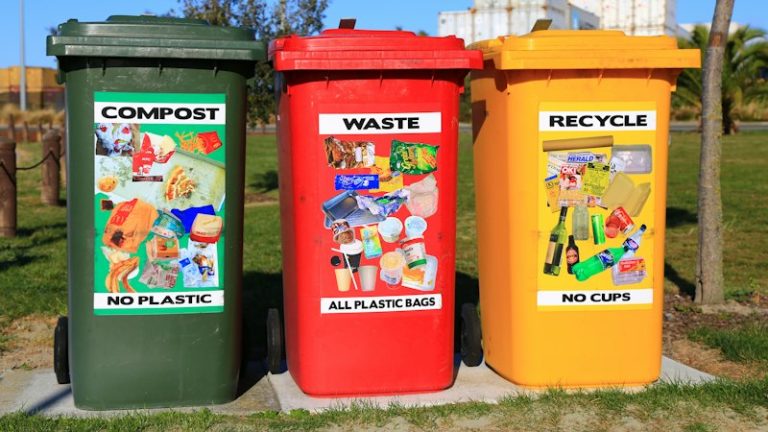
Information reports explain reasons, changes, details and opinions. Organise your notes by bin colour – black, green, blue, brown – and what goes in each one.
Key terms
Ready – press Play to listen.
🎧 Click the bar to jump to any point.
Multiple choice
Choose the correct answer.
1Why is the council changing the system?
Why: Only thirty-two per cent… the price of landfill has nearly doubled.
Line 2 ↗“First, the reason for the changes. Last year, Westbridge recycled only thirty-two per cent of its household waste. The national target is fifty per cent, and the council was told that it must…”
2How often will the black bin be collected?
Why: Every two weeks instead of every week.
Line 4 ↗“The black bin stays the same, but it will now be collected every two weeks instead of every week. Some listeners have already called us to complain about this, especially families with babies. The…”
3Why shouldn't plastic bags go in the blue bin?
Why: They get stuck in the machines.
Line 6 ↗“There's a new blue bin for plastic bottles, metal cans and glass jars. These should be rinsed, but they don't need to be perfectly clean. And please – no plastic bags in the blue bin. They get…”
4What will happen to food waste?
Why: Turned into compost and energy.
Line 7 ↗“Finally, every home will get a small brown caddy for food waste – fruit and vegetable peel, tea bags, leftovers, even meat and fish bones. Food waste will be collected every week and turned into…”
5What happened in Ashford?
Why: Increased recycling to sixty per cent in just two years.
Line 9 ↗“I spoke to Councillor Maria Evans, who is responsible for the environment, and asked her about people's concerns. She said she understood that the change would take some getting used to, but…”
6How can people recognise the recycling advisers?
Why: Bright green jackets.
Line 10 ↗“She also said the council will employ six recycling advisers who will visit neighbourhoods during the first three months to answer questions and help people sort their waste correctly. They'll be…”
True or False
Decide if each statement is true or false.
7The national recycling target is fifty per cent.
Why: The national target is fifty per cent.
Line 2 ↗“First, the reason for the changes. Last year, Westbridge recycled only thirty-two per cent of its household waste. The national target is fifty per cent, and the council was told that it must…”
8Some families with babies have complained.
Why: Especially families with babies.
Line 4 ↗“The black bin stays the same, but it will now be collected every two weeks instead of every week. Some listeners have already called us to complain about this, especially families with babies. The…”
9Wet cardboard can be recycled.
Why: Wet cardboard can't be recycled.
Line 5 ↗“The green bin will now be for paper and cardboard only. Please flatten boxes before you put them in, and make sure they're dry – wet cardboard can't be recycled.”
10Jars must be perfectly clean.
Why: They don't need to be perfectly clean.
Line 6 ↗“There's a new blue bin for plastic bottles, metal cans and glass jars. These should be rinsed, but they don't need to be perfectly clean. And please – no plastic bags in the blue bin. They get…”
11People in flats may get shared containers.
Why: Large shared containers.
Line 8 ↗“The new bins will be delivered between the twentieth and the twenty-eighth of this month. If you live in a flat with no space for four bins, the council will provide large shared containers…”
12The recycling centre is closed on Sundays.
Why: Open seven days a week.
Line 11 ↗“And what about things that don't go in any bin – old electrical items, batteries, clothes or furniture? The recycling centre on Mill Lane accepts all of these, and it's open seven days a week from…”
Complete the notes
Write one word or a number.
13Last year's recycling rate: %
Why: Thirty-two per cent.
Line 2 ↗“First, the reason for the changes. Last year, Westbridge recycled only thirty-two per cent of its household waste. The national target is fifty per cent, and the council was told that it must…”
14Number of containers per home:
Why: Every home will have four containers.
Line 3 ↗“So, what's changing? At the moment, most homes have two bins: a black bin for general rubbish and a green bin for all recycling mixed together. From next month, every home will have four containers.”
15Food caddy colour:
Why: A small brown caddy.
Line 7 ↗“Finally, every home will get a small brown caddy for food waste – fruit and vegetable peel, tea bags, leftovers, even meat and fish bones. Food waste will be collected every week and turned into…”
16Bins delivered between the 20th and the
Why: The twentieth and the twenty-eighth.
Line 8 ↗“The new bins will be delivered between the twentieth and the twenty-eighth of this month. If you live in a flat with no space for four bins, the council will provide large shared containers…”
17Recycling advisers:
Why: Six recycling advisers.
Line 10 ↗“She also said the council will employ six recycling advisers who will visit neighbourhoods during the first three months to answer questions and help people sort their waste correctly. They'll be…”
18Recycling centre: Lane
Why: On Mill Lane.
Line 11 ↗“And what about things that don't go in any bin – old electrical items, batteries, clothes or furniture? The recycling centre on Mill Lane accepts all of these, and it's open seven days a week from…”
Which container?
Where should each item go?
19flattened cardboard boxes
Why: Paper and cardboard only.
Line 5 ↗“The green bin will now be for paper and cardboard only. Please flatten boxes before you put them in, and make sure they're dry – wet cardboard can't be recycled.”
20rinsed glass jars
Why: Plastic bottles, metal cans and glass jars.
Line 6 ↗“There's a new blue bin for plastic bottles, metal cans and glass jars. These should be rinsed, but they don't need to be perfectly clean. And please – no plastic bags in the blue bin. They get…”
21tea bags
Why: Tea bags, leftovers…
Line 7 ↗“Finally, every home will get a small brown caddy for food waste – fruit and vegetable peel, tea bags, leftovers, even meat and fish bones. Food waste will be collected every week and turned into…”
22fish bones
Why: Even meat and fish bones.
Line 7 ↗“Finally, every home will get a small brown caddy for food waste – fruit and vegetable peel, tea bags, leftovers, even meat and fish bones. Food waste will be collected every week and turned into…”
23old batteries
Why: Recycling centre… collection boxes at supermarkets.
Line 11 ↗“And what about things that don't go in any bin – old electrical items, batteries, clothes or furniture? The recycling centre on Mill Lane accepts all of these, and it's open seven days a week from…”
24metal cans
Why: Metal cans… blue bin.
Line 6 ↗“There's a new blue bin for plastic bottles, metal cans and glass jars. These should be rinsed, but they don't need to be perfectly clean. And please – no plastic bags in the blue bin. They get…”