Home › Reading › C1 Reading Tests › The Rise of Lab-Grown Meat
The Rise of Lab-Grown Meat – C1 English Reading Test
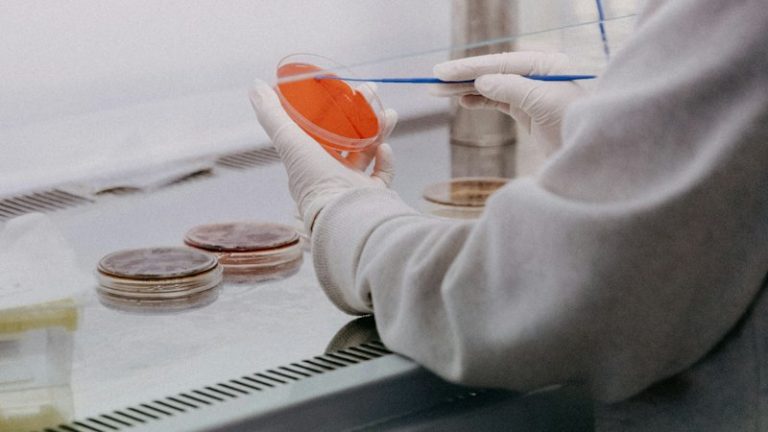
Key words and reading strategy
This article weighs promises against practical, environmental and social obstacles. At C1, notice how the writer qualifies claims – less clear-cut than it first appeared, depend heavily on assumptions – rather than taking sides.
Key terms
The Rise of Lab-Grown Meat
1In August 2013, at a press conference in London, two food critics sat down to taste a hamburger that had cost more than a quarter of a million dollars to produce. Its verdict was cautious – one described it as ‘close to meat’ but lacking juiciness – yet the event was hailed as a landmark. The burger had been grown not on a farm but in a laboratory, from a handful of cells taken from a living cow. A decade later, cultivated meat, as its producers prefer to call it, has moved from scientific curiosity to a multi-billion-dollar industry attracting investment from venture capitalists, celebrities and some of the world's largest food companies.
2The basic process is deceptively simple to describe. Muscle stem cells are extracted from an animal through a painless biopsy and placed in a nutrient-rich medium inside large steel tanks known as bioreactors, where they multiply. With the right signals, the cells develop into muscle and fat tissue, which can then be processed into products such as minced meat or nuggets. In principle, a small sample could yield enormous quantities of meat without the need to raise and slaughter animals.
3Supporters make an ambitious case. Livestock farming is responsible for a substantial share of global greenhouse gas emissions, uses vast tracts of land and is a major driver of deforestation and biodiversity loss. Cultivated meat, they argue, could dramatically reduce these impacts while also eliminating the suffering of billions of animals each year. Because production takes place in sterile conditions, it might also reduce the risk of food-borne diseases and the overuse of antibiotics associated with industrial farming.
4However, translating this vision into reality has proved far harder than early enthusiasts predicted. Growing cells at scale requires a growth medium that, until recently, relied on foetal bovine serum – an expensive ingredient taken from the blood of unborn calves, which rather undermined the industry's ethical credentials. Companies have since developed animal-free alternatives, but these remain costly. Bioreactors must be kept perfectly sterile, since bacteria multiply far faster than animal cells, and even the largest existing facilities produce only a tiny fraction of the meat consumed globally.
5The environmental case is also less clear-cut than it first appeared. A widely cited analysis by researchers at the University of California suggested that, if the energy used in production comes from fossil fuels and the growth medium requires highly refined ingredients, the carbon footprint of cultivated meat could actually exceed that of conventional beef. The authors stressed that these results depend heavily on assumptions about future technology and energy sources, but their work highlighted the danger of treating the product as automatically ‘green’.
6Regulators and consumers present further obstacles. Singapore became the first country to approve the sale of cultivated chicken in 2020, followed by the United States in 2023. Elsewhere, however, the reaction has been hostile: Italy and several US states have moved to ban the product, citing concerns about food safety, cultural heritage and the livelihoods of farmers. Surveys suggest that public attitudes are mixed, with many people expressing curiosity but also discomfort at the idea of meat produced in a factory.
7Whether cultivated meat will become an everyday food or remain a niche luxury is impossible to predict. Some analysts believe its future lies in hybrid products, combining small amounts of cultivated cells with plant-based ingredients to improve taste and texture. What is clear is that the debate raises fundamental questions about how we produce food, what we consider ‘natural’, and how much we are willing to change our habits in the face of environmental crisis.
Multiple choice
Choose the best answer.
1How did the critics react to the 2013 burger?
Why: Its verdict was cautious – ‘close to meat’ but lacking juiciness.
Paragraph 1 ↗“Its verdict was cautious – one described it as ‘close to meat’ but lacking juiciness – yet the event was hailed as a landmark.”
2Why is the process described as ‘deceptively simple’?
Why: Simple to describe… translating this into reality has proved far harder.
Paragraph 2 ↗“The basic process is deceptively simple to describe.”
3Which advantage do supporters NOT mention?
Why: Emissions, animals, disease and antibiotics are mentioned – not price.
Paragraph 3 ↗“Livestock farming is responsible for a substantial share of global greenhouse gas emissions, uses vast tracts of land and is a major driver of deforestation and biodiversity loss.”
4Why did foetal bovine serum damage the industry's image?
Why: Taken from the blood of unborn calves… undermined the ethical credentials.
Paragraph 4 ↗“Growing cells at scale requires a growth medium that, until recently, relied on foetal bovine serum – an expensive ingredient taken from the blood of unborn calves, which rather undermined the industry's ethical…”
5What did the University of California analysis suggest?
Why: Could actually exceed that of conventional beef.
Paragraph 5 ↗“A widely cited analysis by researchers at the University of California suggested that, if the energy used in production comes from fossil fuels and the growth medium requires highly refined ingredients, the carbon…”
6How have some governments reacted to cultivated meat?
Why: Italy and several US states have moved to ban the product.
Paragraph 6 ↗“Elsewhere, however, the reaction has been hostile: Italy and several US states have moved to ban the product, citing concerns about food safety, cultural heritage and the livelihoods of farmers.”
7What future do some analysts see?
Why: Hybrid products combining small amounts of cultivated cells with plant-based ingredients.
Paragraph 7 ↗“Some analysts believe its future lies in hybrid products, combining small amounts of cultivated cells with plant-based ingredients to improve taste and texture.”
True or False
Decide if each statement is true or false according to the text.
8The first lab-grown burger cost over $250,000.
Why: More than a quarter of a million dollars.
Paragraph 1 ↗“In August 2013, at a press conference in London, two food critics sat down to taste a hamburger that had cost more than a quarter of a million dollars to produce.”
9Cells are taken from animals in a painful operation.
Why: Through a painless biopsy.
Paragraph 2 ↗“Muscle stem cells are extracted from an animal through a painless biopsy and placed in a nutrient-rich medium inside large steel tanks known as bioreactors, where they multiply.”
10Bacteria grow more slowly than animal cells.
Why: Bacteria multiply far faster than animal cells.
Paragraph 4 ↗“Bioreactors must be kept perfectly sterile, since bacteria multiply far faster than animal cells, and even the largest existing facilities produce only a tiny fraction of the meat consumed globally.”
11The California researchers said their results depended on assumptions.
Why: These results depend heavily on assumptions.
Paragraph 5 ↗“The authors stressed that these results depend heavily on assumptions about future technology and energy sources, but their work highlighted the danger of treating the product as automatically ‘green’.”
12Singapore approved cultivated chicken before the United States.
Why: Singapore in 2020, the US in 2023.
Paragraph 6 ↗“Singapore became the first country to approve the sale of cultivated chicken in 2020, followed by the United States in 2023.”
13Surveys show the public is overwhelmingly enthusiastic.
Why: Public attitudes are mixed.
Paragraph 6 ↗“Surveys suggest that public attitudes are mixed, with many people expressing curiosity but also discomfort at the idea of meat produced in a factory.”
Paragraph functions
What is the main function of each paragraph? There is one extra option.
14Paragraph 1
Why: The 2013 press conference.
Paragraph 1 ↗“In August 2013, at a press conference in London, two food critics sat down to taste a hamburger that had cost more than a quarter of a million dollars to produce.”
15Paragraph 2
Why: Stem cells and bioreactors.
Paragraph 2 ↗“Muscle stem cells are extracted from an animal through a painless biopsy and placed in a nutrient-rich medium inside large steel tanks known as bioreactors, where they multiply.”
16Paragraph 3
Why: Supporters make an ambitious case.
Paragraph 3 ↗“Supporters make an ambitious case.”
17Paragraph 4
Why: Growth medium, sterility, scale.
Paragraph 4 ↗“Growing cells at scale requires a growth medium that, until recently, relied on foetal bovine serum – an expensive ingredient taken from the blood of unborn calves, which rather undermined the industry's ethical…”
18Paragraph 5
Why: The environmental case is less clear-cut.
Paragraph 5 ↗“The environmental case is also less clear-cut than it first appeared.”
19Paragraph 6
Why: Bans and mixed attitudes.
Paragraph 6 ↗“Surveys suggest that public attitudes are mixed, with many people expressing curiosity but also discomfort at the idea of meat produced in a factory.”
20Paragraph 7
Why: Everyday food or niche luxury?
Paragraph 7 ↗“Whether cultivated meat will become an everyday food or remain a niche luxury is impossible to predict.”
Vocabulary in context
Find a word in the text that matches each meaning.
21an opinion given after consideration (para 1):
Why: Its verdict was cautious.
Paragraph 1 ↗“Its verdict was cautious – one described it as ‘close to meat’ but lacking juiciness – yet the event was hailed as a landmark.”
22kill animals for food (para 2):
Why: Raise and slaughter animals.
Paragraph 2 ↗“In principle, a small sample could yield enormous quantities of meat without the need to raise and slaughter animals.”
23farm animals (para 3):
Why: Livestock farming.
Paragraph 3 ↗“Livestock farming is responsible for a substantial share of global greenhouse gas emissions, uses vast tracts of land and is a major driver of deforestation and biodiversity loss.”
24completely free from bacteria (para 3):
Why: Sterile conditions.
Paragraph 3 ↗“Because production takes place in sterile conditions, it might also reduce the risk of food-borne diseases and the overuse of antibiotics associated with industrial farming.”
25weakened gradually (para 4):
Why: Undermined the industry's ethical credentials.
Paragraph 4 ↗“Growing cells at scale requires a growth medium that, until recently, relied on foetal bovine serum – an expensive ingredient taken from the blood of unborn calves, which rather undermined the industry's ethical…”
26the way people earn money to live (para 6):
Why: The livelihoods of farmers.
Paragraph 6 ↗“Elsewhere, however, the reaction has been hostile: Italy and several US states have moved to ban the product, citing concerns about food safety, cultural heritage and the livelihoods of farmers.”