Home › Reading › B1 Reading Tests › The Rise of Board Games
The Rise of Board Games – B1 English Reading Test
Key words and reading strategy
This article explains a trend and gives several reasons for it. Look for signposts such as Part of the reason, too, the main reason, other benefits – they show how the text is organised.
Key terms
The Rise of Board Games
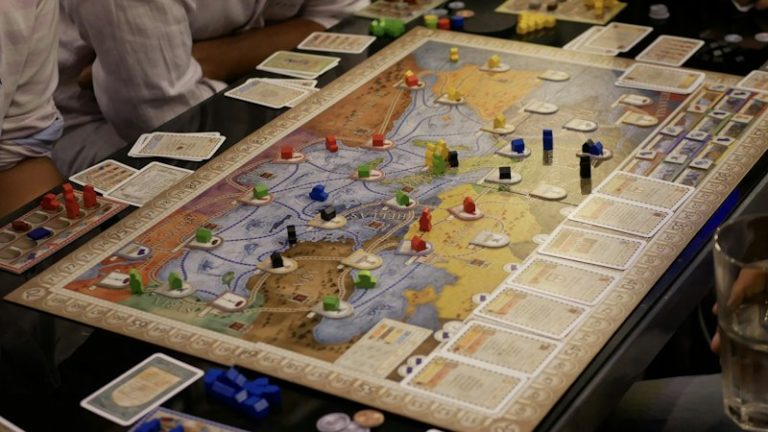
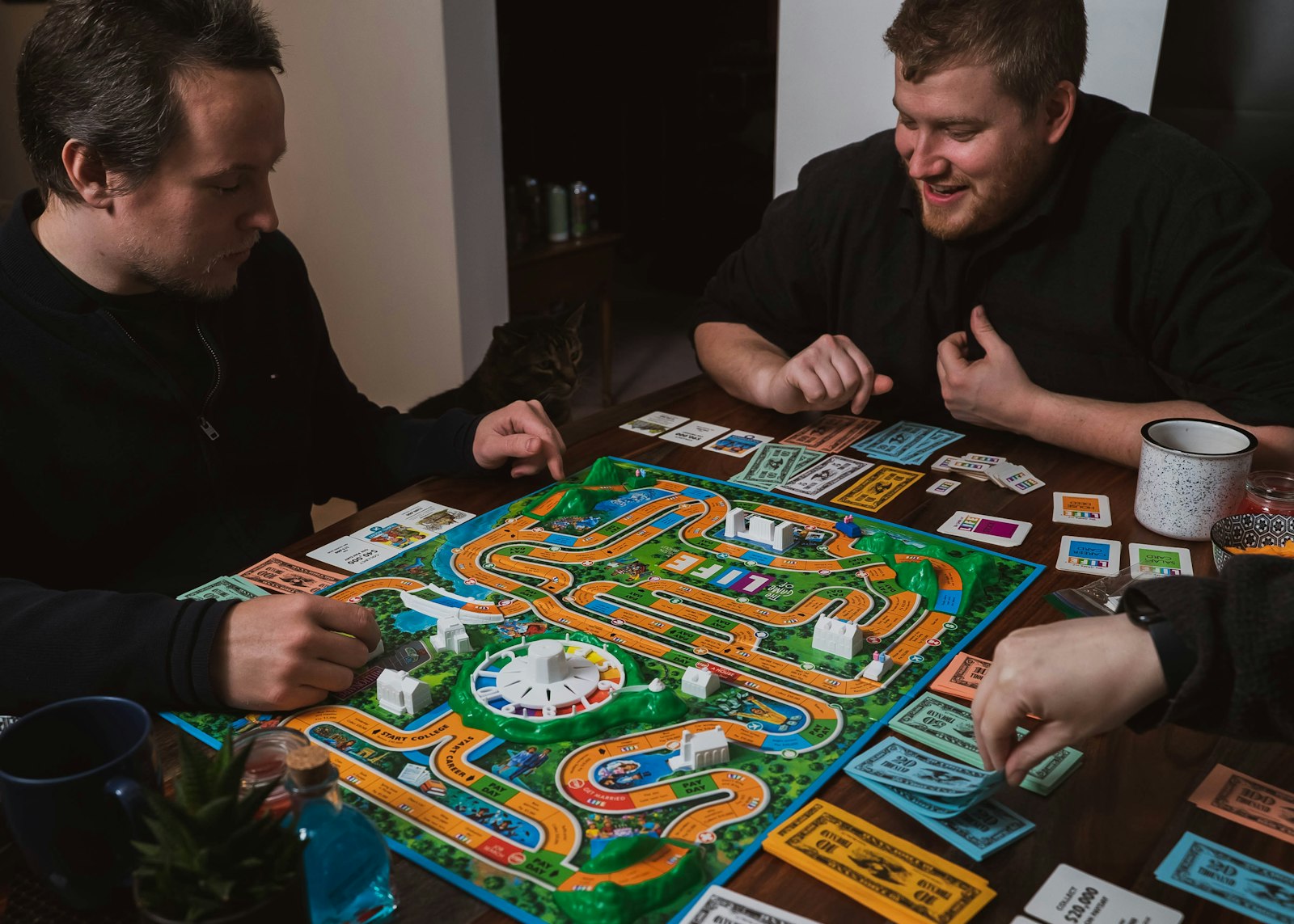
1On a Friday evening in a café in central Bristol, every table is full. But nobody is staring at a phone. Instead, groups of friends are leaning over colourful boards, rolling dice, trading cards and arguing cheerfully about the rules. Behind the counter, shelves hold more than eight hundred games. Welcome to one of the hundreds of board game cafés that have opened across Europe and North America in the last fifteen years.
2It's a surprising trend. Not long ago, many people believed that video games and smartphones would make traditional games disappear. Board games seemed old-fashioned – something you played with your grandparents at Christmas, usually ending in an argument over Monopoly. Yet sales have grown steadily year after year, and the industry is now worth billions of dollars worldwide.
3Part of the reason is that the games themselves have changed. Many modern board games are far more creative than the classics. Instead of simply moving around a board, players might build a medieval city, run a farm, explore space or work together to stop a global disease. Some games last fifteen minutes; others take an entire afternoon. Designers have also reduced the role of luck, so that good decisions matter more than rolling a six.
4The internet, ironically, has helped too. Crowdfunding websites allow small designers to raise money directly from players, so games that big companies would never have published can now find an audience. Online videos teach the rules, which means people no longer have to read a thirty-page instruction book before they can start. And social media has created communities of fans who share reviews and organise events.
5But many experts believe the main reason is social. After a day spent in front of screens, people are hungry for face-to-face contact. A board game gives friends a reason to meet, something to focus on and a natural way to talk and laugh. “It's hard to have a real conversation in a noisy bar,” says the owner of the Bristol café. “Here, the game breaks the ice. I've seen strangers become friends over a game – and even a couple who met here and later got married.”
6There are other benefits as well. Teachers use games to practise maths, planning and teamwork. Some research suggests that regularly playing strategy games may help older people keep their minds active. And many families say that a weekly games night is one of the few times when everyone puts their phones away and spends time together.
7Not everyone is convinced, of course. Some critics say that modern games are too expensive and too complicated for casual players. Others point out that a good game still needs people who are willing to sit down and play. Still, as the noise from the Bristol café shows, plenty of people seem very willing indeed.
Multiple choice
Choose the correct answer.
1What is unusual about the café in Bristol?
Why: Nobody is staring at a phone.
Paragraph 1 ↗“But nobody is staring at a phone.”
2What did many people expect to happen to board games?
Why: Video games would make traditional games disappear.
Paragraph 2 ↗“Not long ago, many people believed that video games and smartphones would make traditional games disappear.”
3How are modern board games different from the classics?
Why: Far more creative… reduced the role of luck.
Paragraph 3 ↗“Designers have also reduced the role of luck, so that good decisions matter more than rolling a six.”
4How does crowdfunding help?
Why: Raise money directly from players.
Paragraph 4 ↗“Crowdfunding websites allow small designers to raise money directly from players, so games that big companies would never have published can now find an audience.”
5According to experts, what is the main reason for the trend?
Why: The main reason is social.
Paragraph 5 ↗“But many experts believe the main reason is social.”
6What does the café owner mean by ‘the game breaks the ice’?
Why: I've seen strangers become friends.
Paragraph 5 ↗“I've seen strangers become friends over a game – and even a couple who met here and later got married.””
7What is one criticism of modern board games?
Why: Too expensive and too complicated for casual players.
Paragraph 7 ↗“Some critics say that modern games are too expensive and too complicated for casual players.”
True or False
Decide if each statement is true or false.
8The Bristol café has more than eight hundred games.
Why: More than eight hundred games.
Paragraph 1 ↗“Behind the counter, shelves hold more than eight hundred games.”
9Sales of board games have fallen recently.
Why: Sales have grown steadily.
Paragraph 2 ↗“Yet sales have grown steadily year after year, and the industry is now worth billions of dollars worldwide.”
10Some modern games involve players working as a team.
Why: Work together to stop a global disease.
Paragraph 3 ↗“Instead of simply moving around a board, players might build a medieval city, run a farm, explore space or work together to stop a global disease.”
11People must always read long instruction books before playing.
Why: Online videos teach the rules.
Paragraph 4 ↗“Online videos teach the rules, which means people no longer have to read a thirty-page instruction book before they can start.”
12A couple met at the café and got married.
Why: A couple who met here and later got married.
Paragraph 5 ↗“I've seen strangers become friends over a game – and even a couple who met here and later got married.””
13Research proves that games prevent memory loss.
Why: Some research suggests… may help.
Paragraph 6 ↗“Some research suggests that regularly playing strategy games may help older people keep their minds active.”
Match the headings
Choose the best heading for each paragraph. There is one extra heading.
14Paragraph 1
Why: Every table is full on Friday.
Paragraph 1 ↗“On a Friday evening in a café in central Bristol, every table is full.”
15Paragraph 2
Why: It's a surprising trend.
Paragraph 2 ↗“It's a surprising trend.”
16Paragraph 3
Why: The games themselves have changed.
Paragraph 3 ↗“Part of the reason is that the games themselves have changed.”
17Paragraph 4
Why: The internet has helped too.
Paragraph 4 ↗“The internet, ironically, has helped too.”
18Paragraph 5
Why: The main reason is social.
Paragraph 5 ↗“But many experts believe the main reason is social.”
19Paragraph 6
Why: Teachers, older people and families.
Paragraph 6 ↗“Teachers use games to practise maths, planning and teamwork.”
20Paragraph 7
Why: Not everyone is convinced.
Paragraph 7 ↗“Not everyone is convinced, of course.”
Vocabulary from the text
Find the word in the text that matches each meaning.
21a general change in what people do (para 2):
Why: A surprising trend.
Paragraph 2 ↗“It's a surprising trend.”
22not modern (para 2):
Why: Board games seemed old-fashioned.
Paragraph 2 ↗“Board games seemed old-fashioned – something you played with your grandparents at Christmas, usually ending in an argument over Monopoly.”
23success that comes by chance (para 3):
Why: The role of luck.
Paragraph 3 ↗“Designers have also reduced the role of luck, so that good decisions matter more than rolling a six.”
24the people who use or enjoy something (para 4):
Why: Find an audience.
Paragraph 4 ↗“Crowdfunding websites allow small designers to raise money directly from players, so games that big companies would never have published can now find an audience.”
25help strangers start talking: break the (para 5)
Why: The game breaks the ice.
Paragraph 5 ↗““Here, the game breaks the ice.”
26completely sure (para 7):
Why: Not everyone is convinced.
Paragraph 7 ↗“Not everyone is convinced, of course.”