Home › Writing › C2 Writing Tests › Can Economic Growth Be Sustainable?
Can Economic Growth Be Sustainable? – C2 English Writing Test
Writing an essay at proficiency level
A C2 essay engages with complex, abstract ideas, defines key terms, problematises assumptions and builds a sophisticated, cohesive argument. Precision of vocabulary and control of register matter as much as the ideas themselves.
Defining & problematising
Much depends on what we mean by ‘growth’. If it is equated solely with GDP, then…
Engaging with positions
Proponents of ‘green growth’ contend that… Degrowth advocates, by contrast, maintain that…
Critical evaluation
The difficulty with this position is that… / This rests on the questionable premise that… / The evidence for decoupling remains, at best, inconclusive.
Synthesis
The more productive question may not be whether…, but…
Key terms
Common mistakes
Choose the most sophisticated sentence
Choose the best option for a C2 essay.
1Opening:
Why: Problematising.
2Presenting a view:
Why: Precise.
3Contrasting view:
Why: Formal.
4Critique:
Why: Critical.
5Hedged evidence:
Why: Precise hedging.
6Synthesis:
Why: Reframing.
What move is the writer making?
Choose the rhetorical move.
7By ‘sustainable’, I mean growth that does not reduce the well-being of future generations.
Why: Defining.
8Mainstream economists argue that markets will adapt.
Why: Presenting.
9Yet this assumes that markets price environmental damage accurately – which they manifestly do not.
Why: Critiquing.
10The picture is further complicated by global inequality.
Why: Complexity.
11Perhaps we should ask not how to grow, but what to grow.
Why: Reframing.
12This argument presupposes that technology will always arrive in time.
Why: Critiquing.
Complete the essay
Type the missing word.
13Absolute of growth from emissions has yet to be achieved globally.
Why: Separation.
14The argument rests on a flawed .
Why: Basis.
15Policymakers face a difficult between jobs and emissions.
Why: Balance.
16The data are, at , ambiguous.
Why: Favourable view.
17Critics that GDP ignores unpaid work.
Why: Argue.
18It is important to the assumption that growth equals progress.
Why: Complicate.
Write your essay
- define and problematise key terms
- engage critically with at least two contrasting positions
- evaluate evidence with appropriate hedging
- conclude with a synthesis or reframing
- Much hinges on what we mean by…
- Proponents of … contend that…
- … by contrast, maintain that…
- The difficulty with this position is that…
- This rests on the questionable premise that…
- The evidence remains, at best, …
- The more productive question may not be whether…, but…
Much hinges on what we mean by ‘growth’ – a term so ubiquitous in political discourse that its meaning is rarely interrogated. If growth is equated solely with rising GDP, then the claim that it is incompatible with sustainability becomes difficult to dismiss. If, however, it can encompass improvements in well-being that place little demand on finite resources, the picture becomes considerably more nuanced.
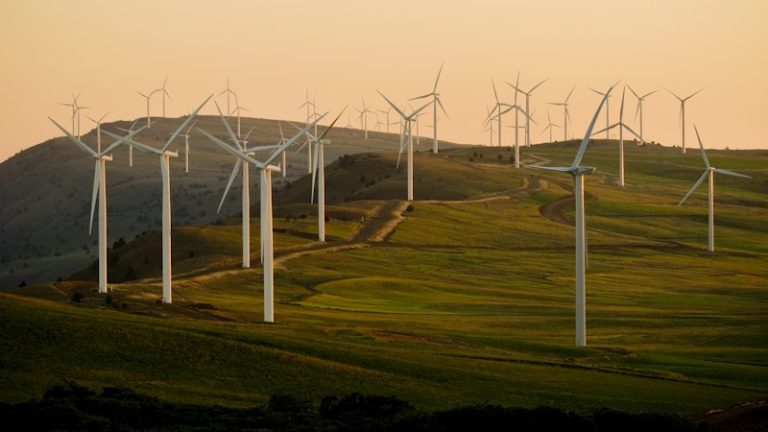
Proponents of ‘green growth’ contend that technological innovation – renewable energy, circular production, digital services – will enable economies to expand while their environmental impact contracts. They point to several European countries that have increased output while reducing carbon emissions.
Degrowth advocates, by contrast, maintain that infinite expansion on a finite planet is a logical impossibility. The difficulty with the green-growth position, they argue, is that it rests on the questionable premise that efficiency gains will consistently outpace rising consumption. History suggests otherwise: more efficient cars have tended to encourage more driving, not less. Moreover, the apparent decoupling achieved by wealthy nations is partly an illusion, reflecting the relocation of emissions-intensive manufacturing to other parts of the world.
The empirical evidence for absolute decoupling on a global scale therefore remains, at best, inconclusive. Yet degrowth faces its own formidable objection: for billions of people in low-income countries, material growth is not a luxury but a necessity.
The more productive question, then, may not be whether growth and sustainability are compatible in the abstract, but which forms of growth, for whom, and measured how. A shift from maximising output to maximising well-being within ecological limits may prove the only coherent path between unsustainable expansion and politically impossible contraction.
- Terms defined and problematised.
- Contrasting positions engaged critically.
- Evidence carefully hedged.
- Sophisticated reframing in the conclusion.